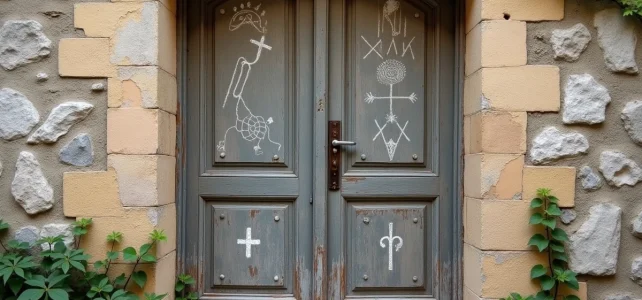
Chalk marks on a low wall, a stone placed near the gate, a cross engraved in the plaster: these discreet signs have fueled conversations among neighbors for years. They are often referred to as “Gypsy symbols” used to identify houses. The reality behind these signs is much murkier than the rumors suggest.
House Marking: What the Confusion Between Ethnicity and Burglary Reveals
Before even discussing chalk or stones, a fundamental issue needs to be addressed. The majority of online articles directly associate these marks with Gypsy or Romani communities. Several pieces of content adopt this label without ever demonstrating a factual link between a community and an organized marking system.
This confusion is documented: mainstream content often relies on repetitions between websites rather than on field checks or recent investigative reports. No recent police validation confirms a structured “Gypsy code”. Only one institutional document among the available sources addresses burglar signs, and it does not mention any ethnic affiliation.
Understanding the meaning of Gypsy symbols attributed to these marks therefore requires separating two distinct realities: on one side, marking practices used by some burglars, regardless of their origin; on the other, an urban legend that sticks an ethnic label on a mundane criminal phenomenon.
Symbols in Front of Houses: Between Burglars’ Marks and Everyday Scribbles
Have you ever noticed a chalk line on your mailbox? The temptation to interpret it as a signal is strong, especially after reading lists of “secret codes” online. The problem is that these lists vary widely depending on the websites that publish them.
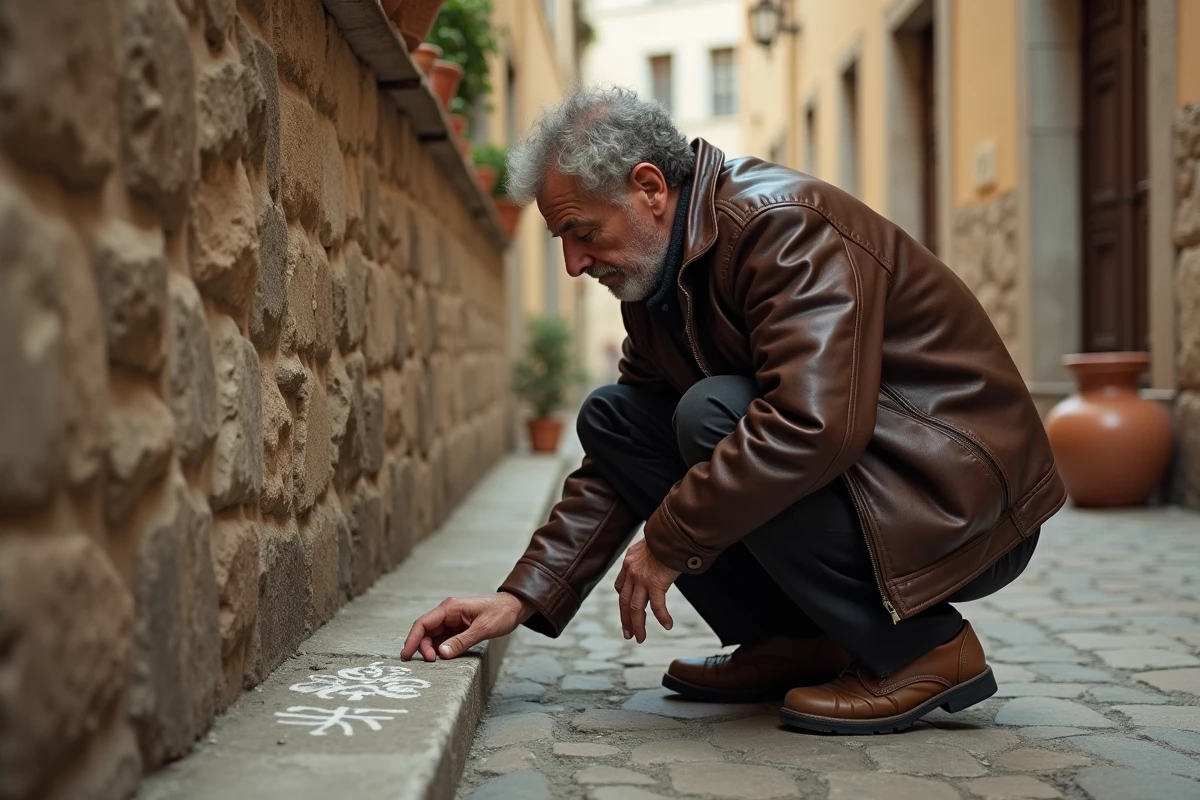
A cross might mean “easy to burgle house,” “house already visited,” or “presence of a dog.” A circle could indicate an interesting target according to one article, and an empty house according to another. This inconsistency is not a detail: it shows that there is no fixed dictionary of these symbols.
Among the most frequently cited marks are:
- Chalk crosses on a low wall, a gate, or a mailbox, interpreted as a signal of the house’s vulnerability.
- Stones or small objects placed in specific locations (doorstep, window ledge), meant to indicate the habits of the occupants.
- Vertical or horizontal lines on the sidewalk in front of the entrance, sometimes associated with the number of occupants or the presence of an alarm system.
- Simple geometric shapes (triangle, diamond) whose meanings vary according to sources, with none being authoritative.
The fact that these interpretations change from neighborhood to neighborhood, from region to region, confirms that we are dealing with local folklore rather than an organized code. A child’s scribble, a surveyor’s mark, or a sign left by a delivery person can trigger the same concerns.
Burglar Spotting: Documented Methods
If “Gypsy codes” largely belong to urban myth, the spotting of homes by burglars is, however, a reality. The methods used are often more discreet and mundane than symbols drawn in plain sight.
Silent spotting is much more common than visible marking. A burglar observes habits: departure and return times, presence or absence of a vehicle, closed shutters during the day, mail accumulating in the mailbox. These clues leave no physical trace.
Some security professionals also mention techniques such as door-to-door solicitation under the guise of sales or surveys, which allows them to assess the interior layout, the presence of valuable items, and the type of lock. No symbol is necessary: a simple text message or a photo sent to an accomplice is enough.

The obsession with chalk marks diverts attention from these more effective and harder-to-detect methods. Monitoring visible habits protects better than searching for symbols on your gate.
Home Security: Reacting Without Succumbing to Panic
Discovering a suspicious mark in front of your home generates anxiety. The right reaction combines vigilance and composure.
If you spot an unusual sign, start by photographing it, then erase it. Report it to your neighbors and, if you deem it necessary, to the local police or gendarmerie. This simple gesture allows you to create a report without dramatizing.
Concrete protection measures remain the same, sign or no sign:
- Vary your outing times and simulate a presence (programmed lights, radio on) during prolonged absences.
- Reinforce entry points: multi-point locks, bolts on accessible windows, outdoor lighting with motion detection.
- Maintain an active neighborhood network where everyone reports unusual behaviors, which remains the most effective deterrent in residential areas.
Local solidarity, an exchange between neighbors about suspicious comings and goings, often proves to be worth much more than a sophisticated alarm system. The best protection relies on collective attention, not on deciphering symbols.
The fantasy of a secret code engraved in front of houses persists because it offers a simple explanation for a complex fear. Marks sometimes exist, their meaning remains almost always unverifiable, and attributing them to a specific community is a shortcut. Concrete security reflexes – varying habits, reinforcing access points, communicating with neighbors – remain the only verifiable response to this type of concern.