A commute repeated five days a week eventually becomes automatic. You let your guard down, skip checks, and small mechanical issues build up without you noticing. Driving with peace of mind every day comes down to a few practical, easy-to-adopt habits that apply to both your vehicle and your behavior behind the wheel.
Manufacturer recalls and roadworthiness tests: what can keep your car off the road
Have you ever received a letter from your car manufacturer notifying you of a safety recall? Many drivers put off taking action because they don’t have time or because the vehicle seems to be working normally.
The problem is that an unresolved recall can have direct consequences during a roadworthiness test. An unresolved “stop drive” procedure results in a critical defect: the vehicle cannot be driven until the repair has been carried out.
In practical terms, a simple administrative oversight can leave your car off the road from one day to the next. The best approach is to check your manufacturer’s website regularly or contact your dealer to find out whether your model is subject to an active recall. Don’t wait until your next roadworthiness test and risk an unpleasant surprise.
Among the practical tips for motorists, this preventive check is one of the easiest—and most often overlooked.

Winter tires and mountain regulations: check the markings before you set off
Winter equipment requirements return every year on November 1 in mountain areas designated by prefectural order. Many drivers assume they’re compliant with all-season tires, but that isn’t always the case.
Only tires bearing the 3PMSF symbol are recognized as equivalent to removable anti-skid devices. A tire marked “M+S” without the three-peak mountain pictogram is not sufficient in the municipalities concerned.
Chains, snow socks, or tires: choosing the right option for your needs
Your choice depends on how often you drive in mountainous areas:
- Metal chains are suitable for drivers who regularly travel in the mountains, as they provide the best grip on packed snow and ice.
- Textile snow socks are a lighter alternative for occasional use, but wear out faster on dry roads.
- Four 3PMSF-marked winter tires eliminate the need for removable equipment and make everyday driving at altitude easier.
In all cases, check that the equipment is compatible with your wheel size and the space available in the wheel arches. Incorrectly sized chains can damage the bodywork or braking system.
One point that’s often overlooked: the requirement applies to specific municipalities, not an entire department. Before an unfamiliar journey, check the prefectural orders along your route to see whether you’ll be passing through an area subject to the mountain regulations.
Routine vehicle maintenance: checks that make a difference on the road
You don’t need mechanical skills to give your vehicle an effective once-over before setting off. A few quick checks, done once a week, are enough to spot most problems before they become dangerous.
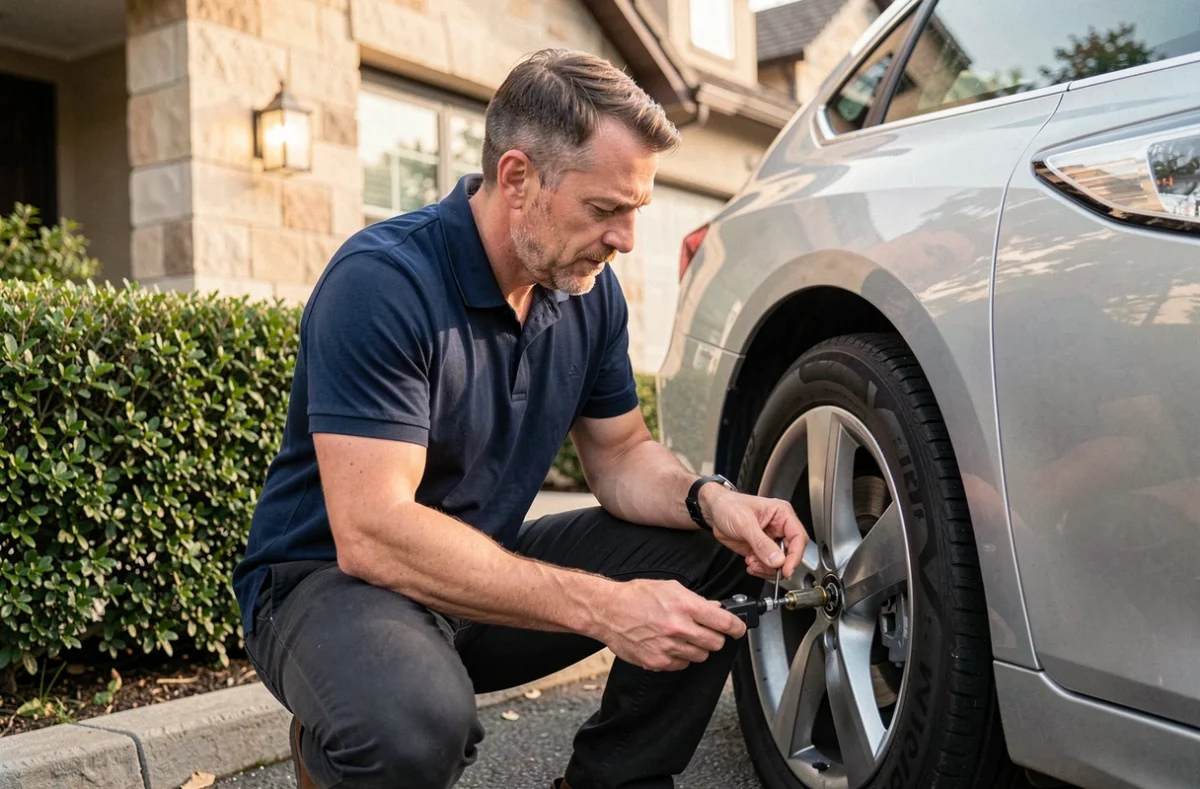
Check tire pressure when the tires are cold, with the engine off for at least two hours. Underinflated tires increase braking distances and fuel consumption. Overinflated tires reduce the contact area with the road and compromise grip when cornering.
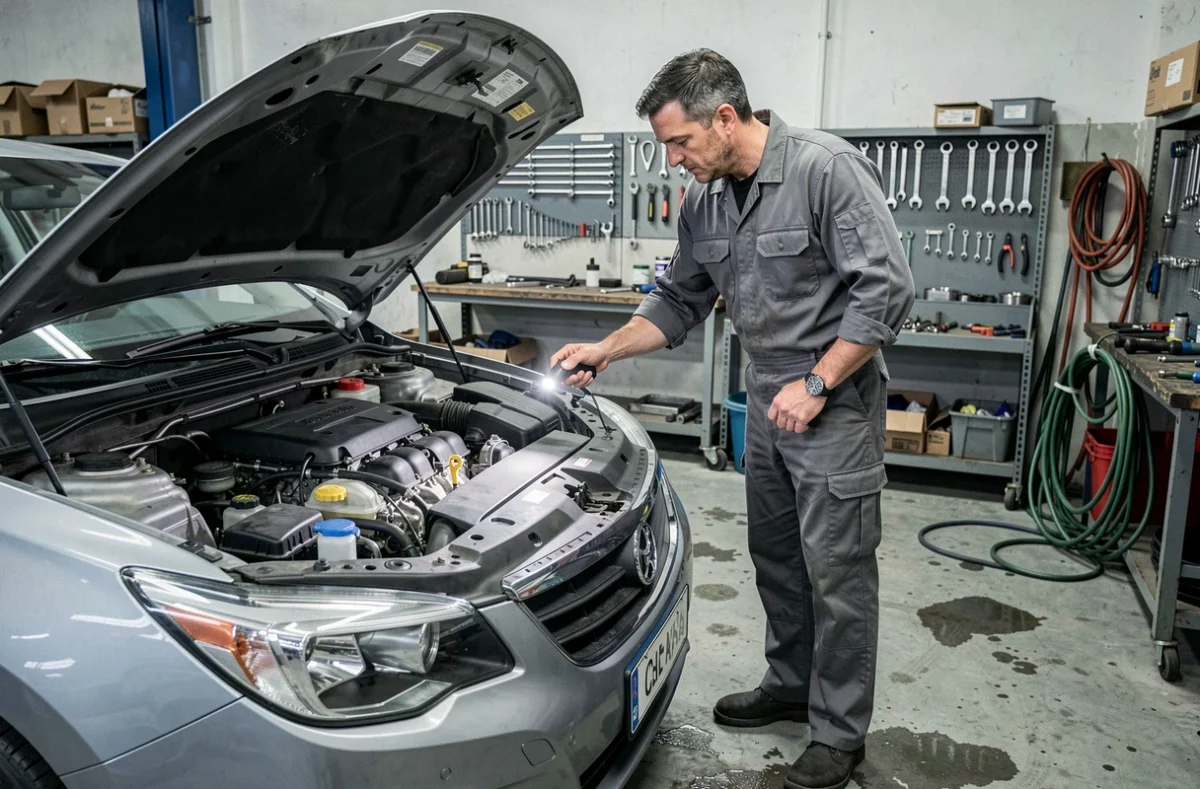
Check the brake fluid level on level ground with the engine cold. If it’s close to the minimum, this often means the brake pads are worn. The same applies to coolant: a consistently low level may indicate a leak that needs to be dealt with promptly.
Wipers and lights: two often-overlooked checks
Wiper blades that leave streaks reduce visibility far more than you might think, especially at night in the rain. Replacing them takes just a few minutes and costs very little.
Check your lights at least once a month, including the reversing lights and rear fog lights. A burned-out brake light increases the risk of a rear-end collision and could also result in a fine during a traffic stop.
Fatigue and distractions behind the wheel: adjust your daily journeys
On a familiar route, your brain switches to autopilot. That’s precisely when the risk increases. A large proportion of accidents happen close to home, on routes the driver knows by heart.
Fatigue makes this worse. After a long day without sleep, your reflexes deteriorate in much the same way as they do when your blood alcohol level is over the legal limit. The first sign of drowsiness means you should stop immediately, even if you only have a twenty-minute drive ahead.
Your phone remains the most common distraction. Set up your GPS or navigation app before you set off. Even a brief adjustment while driving takes your attention away for several seconds—enough to travel dozens of meters blind in the city.
- Set your route and playlist before turning the ignition key.
- Keep your phone out of reach or enable driving mode to block notifications.
- If your journey is longer than an hour, plan a break, even a short one, to refocus.
Keeping a safe following distance is just as important as wearing a seat belt. In town, at fifty kilometers per hour, leaving a two-second gap behind the vehicle in front gives you time to react to sudden braking. On the highway, allow at least three seconds.
Peace of mind behind the wheel doesn’t depend on one dramatic action. It comes from small habits repeated every day: a quick look at your tires, checking for recalls, putting your phone away. These habits take little effort, but they can transform the entire journey.