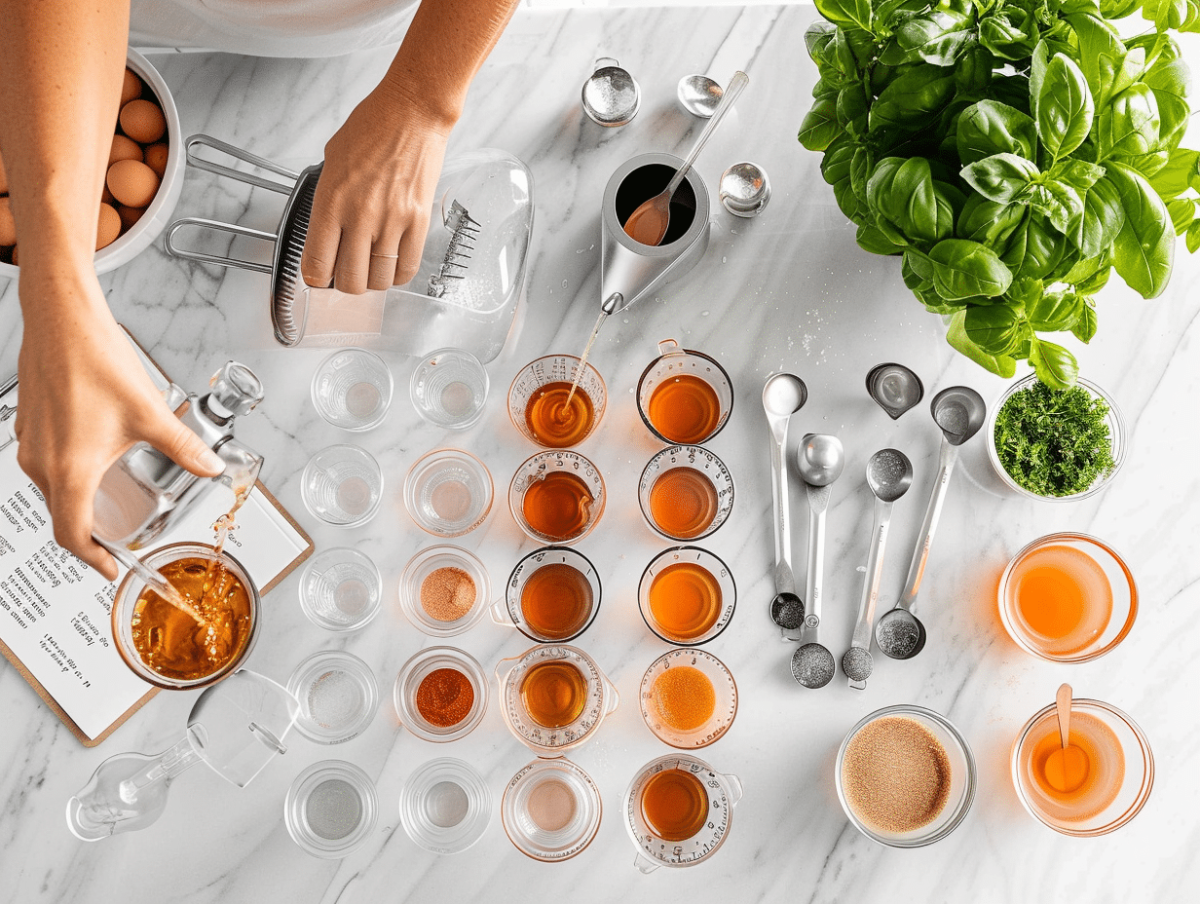
The conversion of liquid measurements is a daily task in the kitchen, laboratory, and various industries. Yet, many people make mistakes that can affect the accuracy of recipes, the quality of experiments, or the consistency of products. These errors often stem from a lack of understanding of measurement units, confusion between the metric and imperial systems, or improper use of measuring instruments. It is essential to fully understand the equivalences and master measurement techniques to ensure reliable and reproducible results. Identifying common pitfalls will help avoid mistakes and ensure proper conversion of liquids.
Understanding Measurement Units and Their Importance in Conversions
Measurement units form the foundation of any conversion operation, especially in cooking and mixology. Mastering the different volume units such as liters, milliliters, and centiliters is essential for accurately converting liquids. Consider the following example: converting 150 ml to centiliters results in 15 cl, a simple operation yet a source of errors if the basics are not firmly established.
The conversion of measurement is not limited to volume. Weight and temperature also play a fundamental role in recipes and scientific experiments. Understanding that an ounce is equivalent to about 28.35 grams and that a tablespoon contains approximately 15 ml in France (compared to 20 ml in the United States) is crucial for international conversions.
Manual conversions such as “1 liter equals 100 centiliters or 1000 milliliters” must be known by anyone venturing into handling liquids. This implies familiarity with measurement unit conversions and a commitment to avoiding dangerous approximations.
When we address temperature, precision becomes even more delicate. The conversion formula from Fahrenheit to Celsius, “(°F – 32) x 5/9 = °C”, illustrates the potential complexity of a simple thermal conversion. This underscores the importance not only of knowing measurement units but also of understanding how to manipulate them through precise formulas and conversions.
Strategies and Tools to Avoid Conversion Errors
Reliable conversion tools, such as dedicated mobile apps and specialized websites, prove to be key allies in avoiding common errors. These digital resources, often updated to reflect international standards, allow for instant conversions between various measurement units. Their use significantly reduces the risk of inaccuracy, provided the user ensures the reliability of the chosen tool. Modern cookbooks frequently include conversion tables that help navigate between measurements of different systems, thus bridging the gap between culinary tradition and scientific rigor.
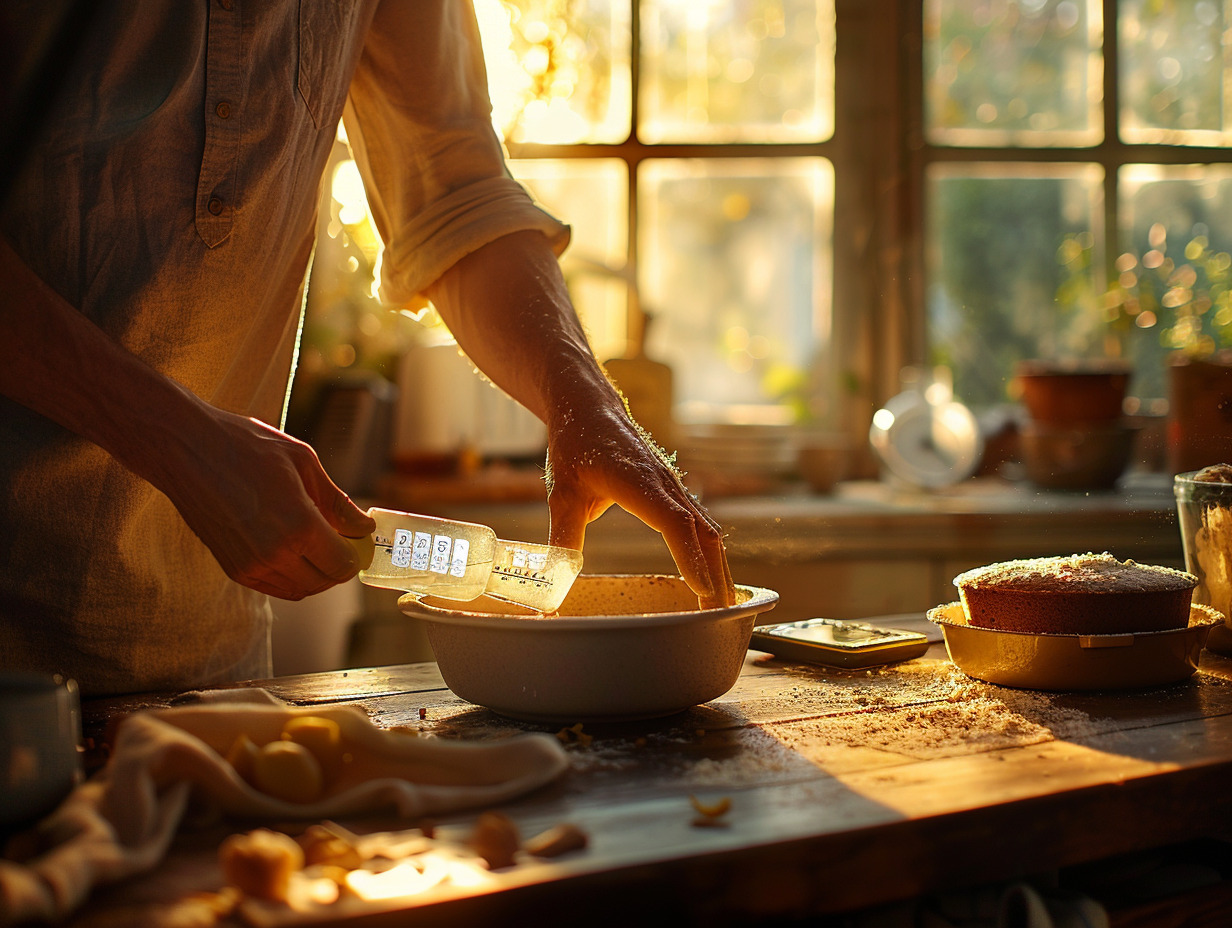
Adapting measuring utensils and instruments to the task at hand is equally fundamental. Using an accurate measuring cup, a digital kitchen scale, and graduated measuring spoons can transform approximation into precision. These instruments, when properly calibrated and used, provide direct and reliable measurements, essential for accurate conversions. A good-quality kitchen thermometer ensures a faithful and immediate temperature conversion, a significant element in processes that depend on heat, such as baking or candy-making.
Beyond tools, personal expertise remains a reliable asset. Learning to manually convert liquid measurements is a fundamental skill for anyone wanting to guard against conversion errors. This basic knowledge allows individuals to verify and confirm results obtained through digital means. It also enables greater autonomy and adaptability in situations where technology might fail. Avoiding approximations and prioritizing precision is a discipline in itself for all professionals and informed amateurs operating in the realms of cooking, mixology, or any other field where the conversion of liquid measurements is frequent.