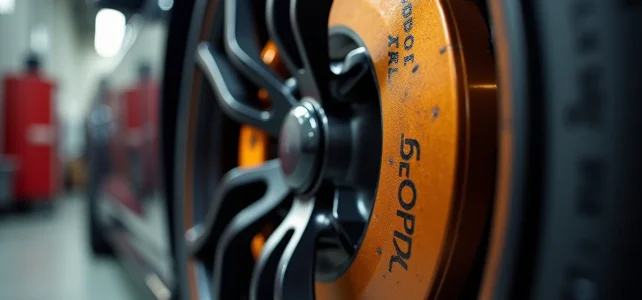
A ceramic brake disc is a carbon-ceramic matrix composite (silicon carbide infiltrated in a carbon fiber structure). This material transforms kinetic energy into heat with a thermal resistance significantly higher than that of cast iron or steel. This difference in composition profoundly changes the braking behavior, as well as maintenance, cost, and compatibility with the rest of the chassis.
Carbon-ceramic matrix: how the material changes braking
Gray cast iron, used on almost all production vehicles, absorbs heat gradually but reaches its limits during repeated demands. Beyond a certain thermal threshold, the cast iron disc loses bite, a phenomenon known as thermal fading.
The carbon-ceramic composite retains its friction properties at much higher temperatures. This stability comes from the material’s structure: the carbon fibers ensure rigidity while the silicon carbide resists abrasion. The disc does not deform under heat, maintaining a uniform contact with the pads.
A rarely mentioned point: the electronic calibration of the braking system (ABS, ESP, force distributor) must be adapted to the type of disc installed. As indicated by ceramic brake discs according to iLinks, switching from a steel disc to a ceramic disc on a high-end vehicle modifies the system’s response, sometimes requiring reprogramming of the braking computer.
Thermal resistance and wear of ceramic discs in real use
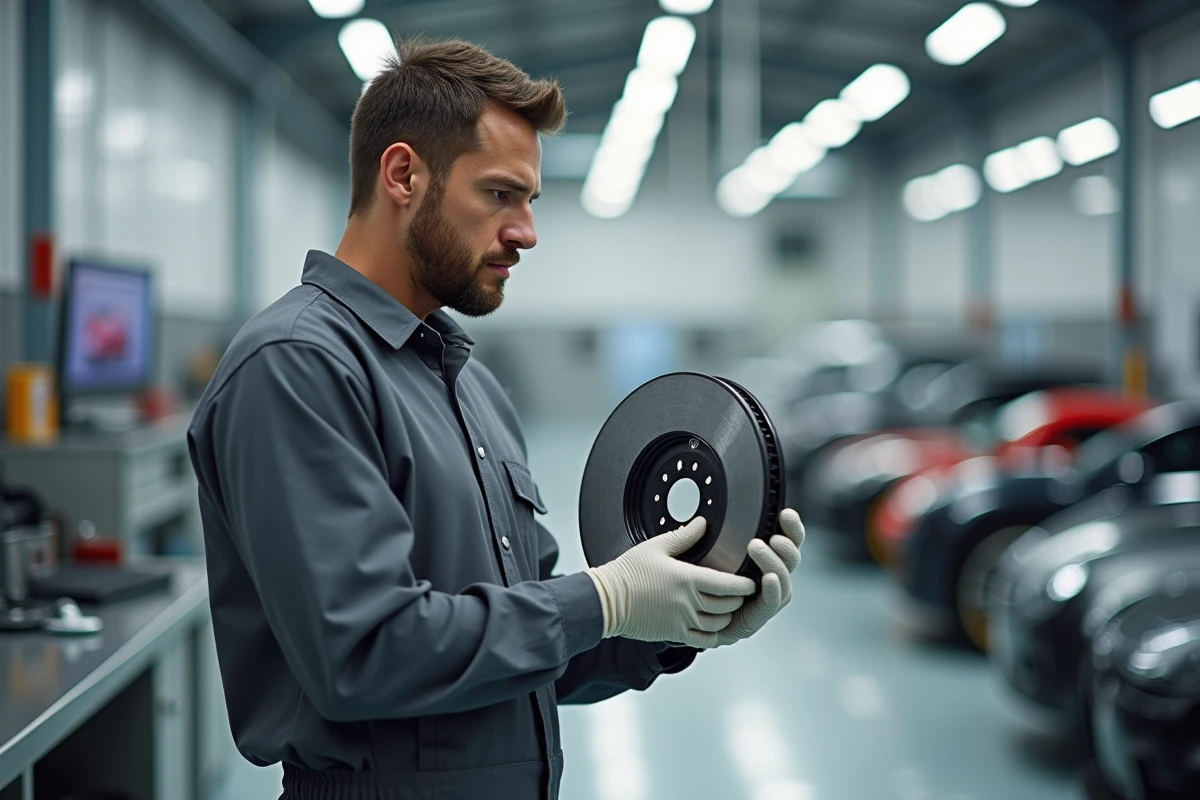
The lifespan of a carbon-ceramic disc far exceeds that of a cast iron disc, sometimes by several times. This longevity comes from the hardness of silicon carbide, which reduces mechanical wear on the friction surface.
In return, the associated pads must be specifically formulated for this type of disc. Using standard metallic pads on a ceramic disc causes premature abrasion of the composite and can generate vibrations.
What accelerates degradation
The German association ZDK (Zentralverband Deutsches Kraftfahrzeuggewerbe) issued a recommendation to workshops in 2023 regarding damage caused by high-pressure cleaning. A jet that is too close and perpendicular to a still hot disc causes micro-cracks and surface chipping. This type of deterioration goes unnoticed by the naked eye but gradually degrades braking performance.
- High-pressure washing on a hot disc: wait for complete cooling before any direct cleaning
- De-icing salt and corrosive splashes: the composite is more resistant to corrosion than cast iron, but the associated fasteners and calipers remain vulnerable
- Prolonged parking without driving: ceramic discs do not rust, unlike cast iron, which develops a corrosion coating after a few days of immobilization
Cost of replacing ceramic discs: a changing reality
The cost of replacing a set of carbon-ceramic discs remains the main barrier to their adoption. On a Porsche or Audi RS vehicle equipped from the factory, the aftermarket price represents a substantial budget, sometimes comparable to the price of a small used car.
Since 2023, several premium manufacturers have reduced their prices through braking packs or factory standard exchanges. Jato Dynamics confirms this trend in its 2024 European study on the cost of ownership of premium vehicles.
This relative decrease does not make the ceramic disc accessible to all budgets, but it reduces the gap with high-end steel solutions over the ownership period. A ceramic disc that lasts several times longer than a cast iron disc partially offsets its initial extra cost.
Chassis and tire compatibility: an underestimated parameter
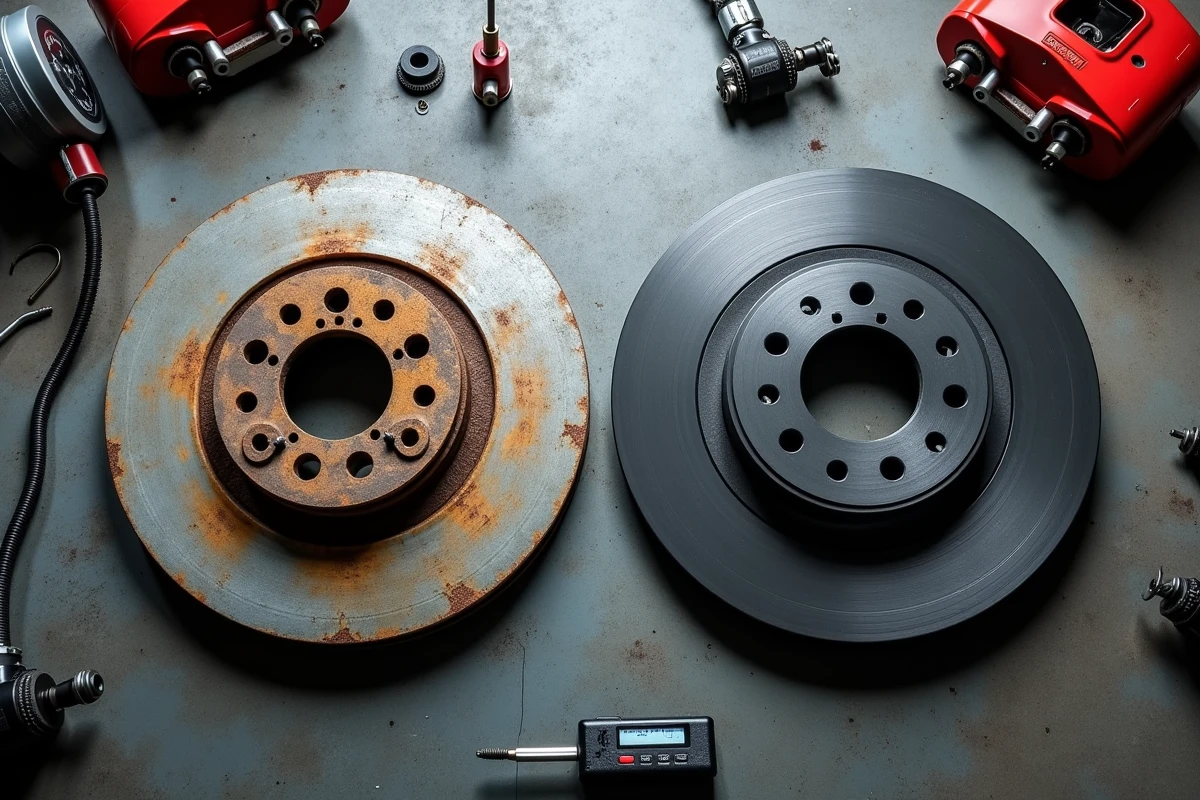
Weight reduction is a frequently cited argument for ceramic discs. A composite disc weighs significantly less than a cast iron disc of equivalent dimensions. This reduction in unsprung mass improves suspension responsiveness and steering precision.
The type of disc directly influences the choice of tires. BMW, in its technical manual for the M4 G82 (2023 version), details how switching to carbon-ceramic discs changes tire fitment recommendations. The reason: more powerful and consistent braking puts more stress on the tire sidewall and tread during hard decelerations.
On a vehicle equipped with ceramic discs, fitting unsuitable tires (too low speed rating or too hard compound) negates some of the benefits. The braking system and the tire form an inseparable pair.
When the ceramic disc offers no advantage
For exclusively urban use, with short and low-intensity braking, the ceramic disc never reaches a high enough temperature to express its thermal advantage. Under these conditions, a quality cast iron disc offers comparable performance at a much lower cost.
- Daily urban use: the cast iron disc is sufficient, operating temperature remains low
- Regular sporty driving or track: the ceramic disc fully expresses its resistance to fading
- Long mountainous trips with sustained braking: the composite maintains consistent bite where cast iron declines
The choice between ceramic and cast iron primarily depends on actual driving conditions. A ceramic disc installed on a car that never exceeds the thermal limits of cast iron remains an investment without concrete return, while on a track or during prolonged alpine descents, the difference in behavior becomes tangible from the first firm braking.