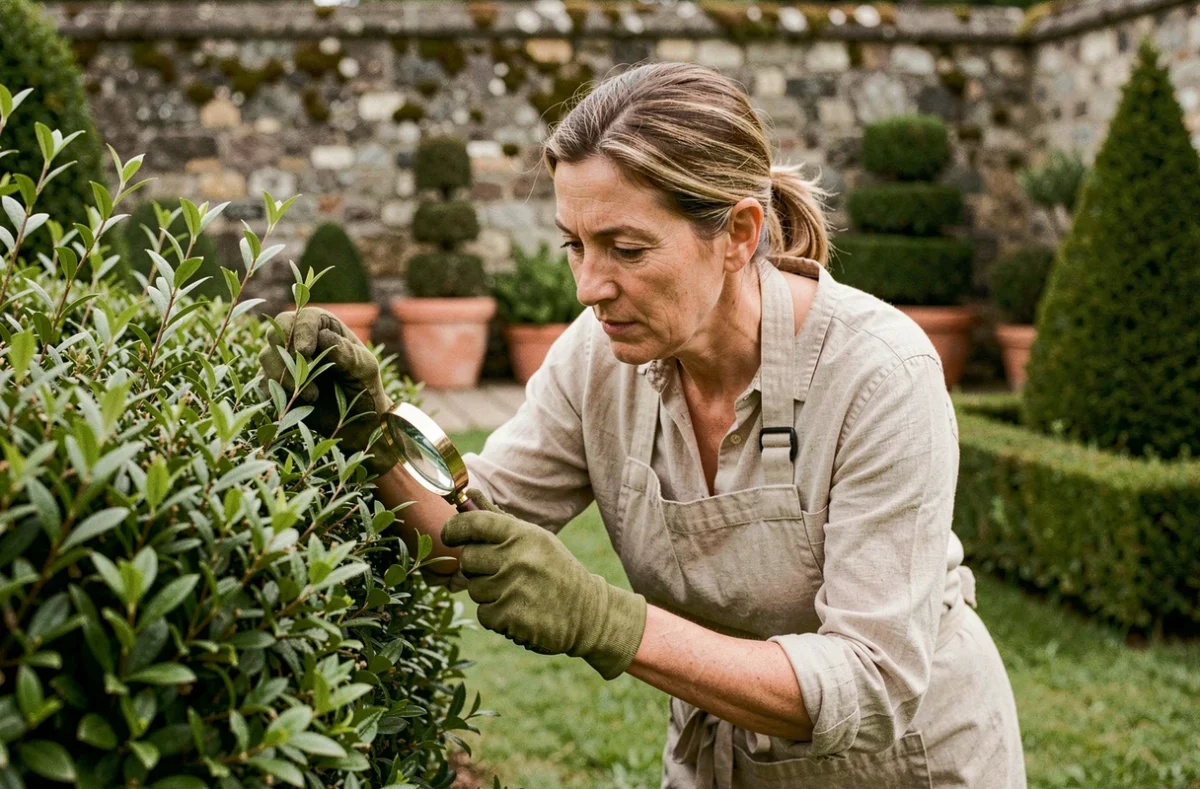
The box tree moth (Cydalima perspectalis) does not forgive a late diagnosis. Before spraying anything, we recommend clearly distinguishing a caterpillar attack from a fungal problem, as both can coexist on the same plant and the responses are radically different.
Differential diagnosis before treatment: box tree moth or fungus
A boxwood that is browning is not necessarily attacked by the moth. Cylindrocladium buxicola and Volutella buxi cause foliar necrosis and defoliation that appear similar. Treating a boxwood affected by cylindrocladiosis with Bacillus thuringiensis is a waste of time and allows the fungus to progress.
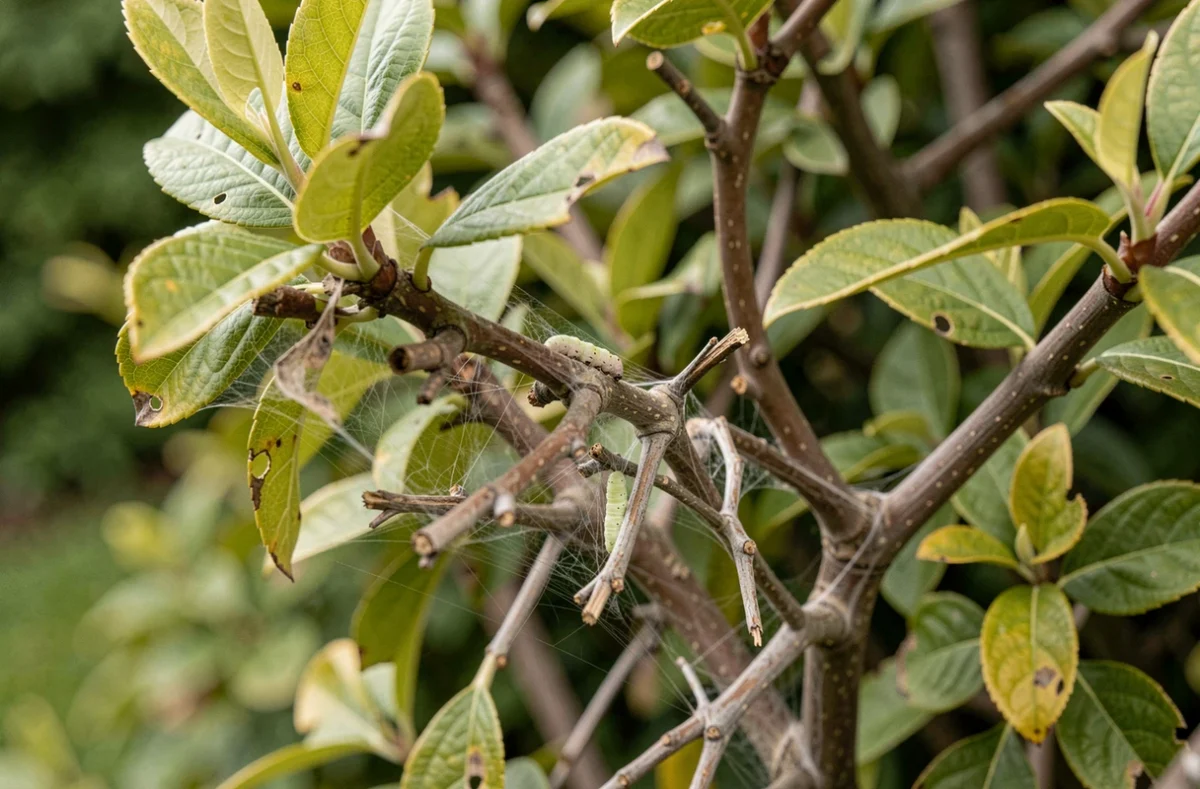
The diagnostic trio that points to the moth: green caterpillars with black heads, silky webs, and black droppings clustered between the leaves. If you instead observe brown-orange spots on the branches, a blackening of the bark at the base, or leaves stuck together without visible webs, examine the fungal route before intervening.
We frequently observe gardens where both problems coexist. In this case, the priority is to manually remove the caterpillars and webs, then treat the fungal aspect with sanitary pruning and an appropriate fungicide, before planning biological control against the moth.
Bacillus thuringiensis: limits of spraying on dense boxwood
The Bacillus thuringiensis var. kurstaki (Btk) remains the reference for biological treatment. Its mode of action relies exclusively on ingestion: a caterpillar that does not consume treated leaves does not die. This point seems obvious, but it explains the majority of failures reported by gardeners.
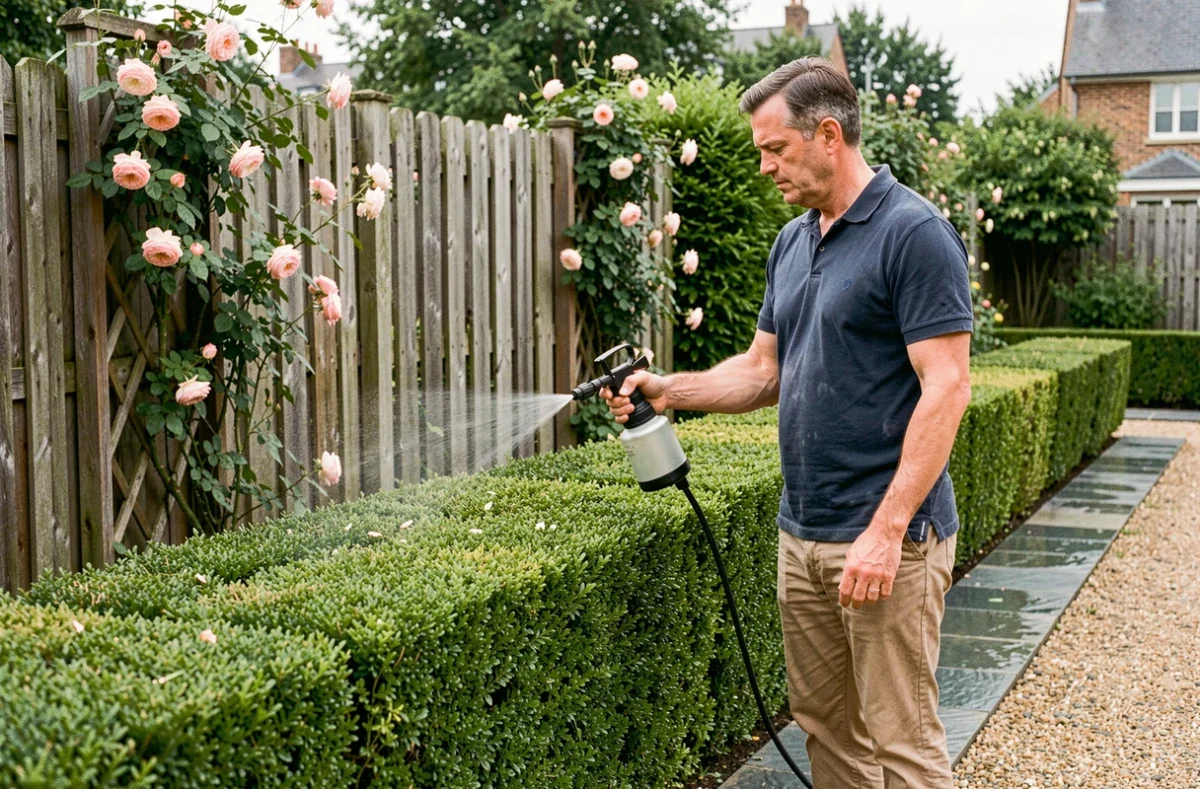
On a boxwood trimmed into a ball or tight hedge, the inner foliage receives very little product during a standard spray. However, caterpillars often feed inside the foliage, protected by their webs. To effectively treat the box tree moth, it is necessary to manually open the foliage, spread the branches, and spray at the heart of the vegetation, not just on the surface.
Applying in the late afternoon also improves the persistence of the product. Btk degrades quickly under UV light. A spray at noon on a sunny day loses a significant part of its effectiveness within a few hours.
Application window and larval stage
The effectiveness of Btk is maximal on young caterpillars, before they exceed a few centimeters. Older larvae consume less relative to their body mass and are more resistant to the toxin. We recommend combining pheromone trap monitoring with a weekly visual inspection of the foliage starting in spring.
Pheromone trap: a monitoring tool, not an eradication method
The pheromone trap captures male moths by simulating the chemical signal of females. Its primary role is to date the flights to schedule treatment, not to significantly reduce the population. A few males captured on a sticky trap do not hinder reproduction on a garden scale.
Specifically, capturing the first moths indicates that laying has begun. Young caterpillars then appear within two to three weeks depending on the temperature. It is during this window that the first application of Btk should be prepared.
- Install the trap by the end of winter to detect the first spring generation, the most discreet and often the most damaging.
- Check the trap weekly and note the capture dates to anticipate the following generations (two to three flights per season in a temperate climate).
- Do not rely on the trap as a means of control: it complements visual inspection and treatment, it does not replace them.
Integrated strategy over the season: timeline of interventions
The moth produces several generations per year. A single application of Btk in spring does not protect the boxwood until autumn. Effective control relies on a schedule of interventions adapted to the pest’s cycle.
- End of winter: inspect the boxwoods to spot pupation cocoons in the litter and diapausing larvae between the leaves. Manually remove and prune dead parts.
- First flight (spring): set the pheromone trap, then the first spraying of Btk as soon as young caterpillars appear, focusing on the inner foliage.
- Second and third generations (summer): renew treatment with each detection of new larvae. Minimum interval of ten days between two applications if rain washes away the product.
- Autumn: complete cleaning under the boxwoods, collecting fallen leaves and web residues to limit the winter stock of diapausing larvae.
The regularity of monitoring matters more than the choice of product. A gardener who inspects their boxwoods weekly and intervenes at the right larval stage will achieve better results than a single late treatment, even with a more powerful product.
Strengthening the resilience of boxwood after an attack
A severely defoliated boxwood can regrow if the structure of the branches is intact. Regular watering and the addition of organic fertilizer at the base promote recovery. However, a boxwood attacked simultaneously by the moth and a fungus has little chance of recovering without intervention on both fronts.
The temptation to replace destroyed boxwoods with alternative species (ilex crenata, lonicera nitida) is growing in the most affected gardens. This choice is justified when infestations recur despite rigorous monitoring and the cost of treatments exceeds the ornamental value of the plants.